











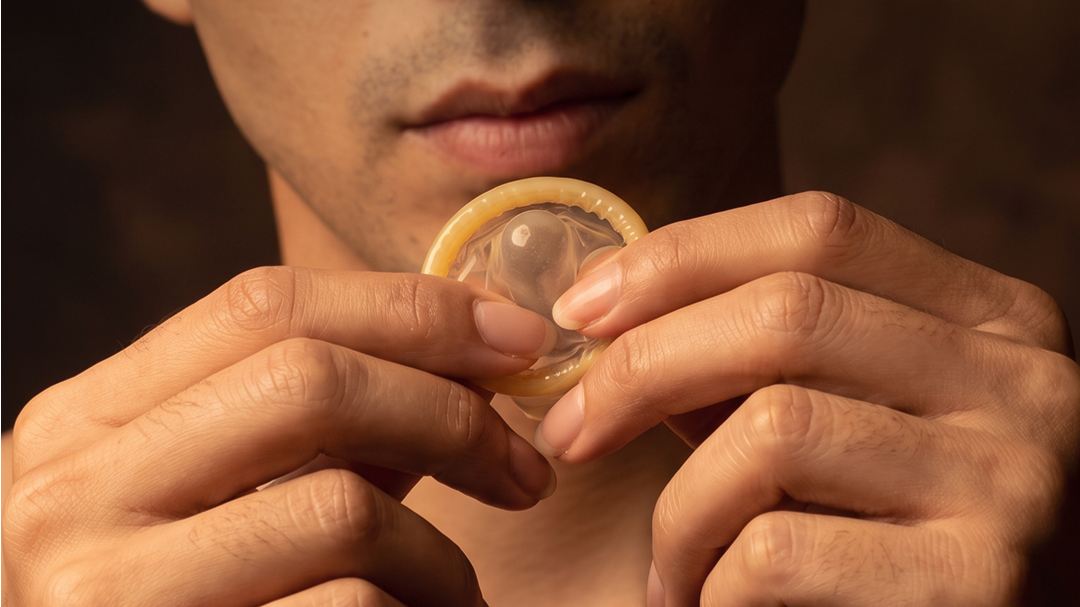
Almost everyone has a condom horror story. The one that snapped at the worst possible moment. The one fished out of a wallet where it had been living with an expiration date from before anyone knew what a Brexit was. The one that turned a hot moment into an interpretive dance involving foil packets, bad lighting, and the immortal question: "wait, which way does it roll?". And of course… your mother/sister/brother finding the box and wanting to talk about it.
The truth is that we're bad at condoms, not because condoms are bad, but because almost nobody ever taught us how to actually use and enjoy them. No one mentioned sizing. No one mentioned materials. No one mentioned that lube can make or break the whole experience (literally, in the case of oil-based lube and latex, we’ll touch on this in part two).
So we’re here to fix that. This is the guide we all should have gotten. No shame, no giggles, no diagrams of fruit. Just the real, useful information.
In part one, we’re getting to know the condom itself: the types, materials, and measurements that determine whether it actually fits your body and your sex life. In part two, we’ll put that knowledge into action, covering technique, lube, toys, myths and how to make condoms feel like part of the pleasure rather than the paperwork before it.

Condom Types
Condoms come in more variations than most people realise, and picking the right one is less about novelty and more about actually finding what works for your body and your sex life.
- External (penis or strap-on) condoms: the classic. Worn on the penis, a toy, a strap-on, or over fingers. These are the condoms that Climax Change currently offers and unless we say otherwise, these are the condoms we’re referring to when we speak about condoms.
- Internal condoms: inserted into the vagina before penetration. They give the receiving partner more control and can be inserted ahead of time, taking some pressure off the moment. Internal condoms are also sometimes used for anal sex, but evidence for their effectiveness in preventing STIs is limited.
- Flavoured: usually made with oral sex in mind. Some flavouring ingredients can cause vaginal irritation, disrupt the vaginal environment or irritate sensitive anal tissue, so check the packaging before using one for penetration. Double check what the condom is intended for.
There truly are many more kinds of condoms; textured condoms, soft-cock condoms, glow-in-the-dark condoms, one-hand-opening condoms and more. The packaging will often share what the condom can be used for.
Condom Materials: Not All Rubber is Created Equal
"Rubber" is commonly used as slang for “condom”. But condoms are made from several different materials, each with its own pros and cons.
- Latex: a stretchy material made from the milky sap of rubber trees. It’s the most common condom material because it’s thin, flexible, strong and relatively affordable. Climax Change condoms use natural latex sourced from fair trade certified plantations, supporting fairer pay and better conditions for the people and communities involved in producing it. Latex offers strong protection against pregnancy and most STIs when used correctly.
- Polyisoprene: a synthetic, latex-free alternative for people with a natural-rubber latex allergy. It stretches and feels similar to latex, although sensitivities to other ingredients are still possible. Polyisoprene offers strong protection against pregnancy and most STIs when used correctly.
- Polyurethane: thinner, transfers heat well, and is another latex-free option, but it's less stretchy, so fit matters even more here. Polyurethane offers strong protection against pregnancy and most STIs when used correctly.
- Lambskin (old school, increasingly uncommon and very expensive): made from a natural membrane. It's the odd one out. It protects against pregnancy but it has natural pores that don't block viruses, so it does not protect against STIs. Worth knowing before you reach for it thinking it's a safer or "more natural" choice.

Condom Sizes and How to Measure
Plenty of people are wearing the wrong size condom, and even more have never measured. "One size fits most" is the industry's polite way of saying "we didn't want to make this complicated". It has cost a lot of people comfort, confidence, and ironically, protection. A condom that's too tight is more likely to break. A condom that's too loose is more likely to slip off. Neither is doing its job.
The good news: measuring takes thirty seconds, a piece of string and ruler (or a flexible tape measure).
- Get erect (measurements change with arousal, so measure when it counts).
- Wrap the string or tape around the base of the shaft, this is girth, and it's the measurement that actually determines fit, not length.
- Note the number in millimeters.
- Match your measurement to the brand’s sizing chart. Condom packaging usually lists the nominal width: the width of the condom when laid flat. This is not simply half your penis circumference, so use the manufacturer’s recommended girth range rather than doing the calculation yourself.
Length matters far less than most people assume. Condoms are designed with extra room at the tip and can be rolled to fit a shorter length, but girth is non-negotiable. Get that right and everything else follows.
Why choose Climax Change condoms?
Every Climax Change condom is made using CE-certified premium latex for maximum sensitivity without compromising protection. Our condoms are vegan, cruelty-free and dermatologically tested, with no parabens, dyes or artificial fragrances. Our latex is sourced from Fairtrade-certified plantations, and a large share of our profits go towards restoring nature.
We offer different sizes, thicknesses and textures because having options makes it easier to have safer sex.
Now, find your fit:
Classic Natural - Slim (53mm) and Regular (56mm)
Our classic everyday condom, offering a comfortable regular fit.
Classic Natural - Large (57 mm)
Our classic everyday condom, offering a comfortable larger fit.
Made with thicker walls for extra durability and reassurance when you want to play with confidence.
A textured condom designed to enhance stimulation. The raised ribs create extra sensation for both partners.
Ultra Thin - Regular (53mm / 56mm)
Made with thinner latex for greater sensitivity and a more natural feel, without compromising protection.
The sensitivity of an ultra-thin condom in a larger, secure fit.
Stay tuned for part 2, where we will share how to use lube with condoms, how to make condoms hot, and why we got so weird about condoms in the first place.
Technical sources
- Condomerie: Which nominal width is right for me?
- World Health Organization: Condoms
- World Health Organization: Condoms and contraception
- CDC: Condom Use — An Overview
- CDC: Preventing HIV with Condoms
- CDC: How to Use a Dental Dam
- CDC: STI Treatment Guidelines — Primary Prevention Methods
- NHS: Condoms
- Planned Parenthood: Safer Sex
- Planned Parenthood: How to Put On a Condom